
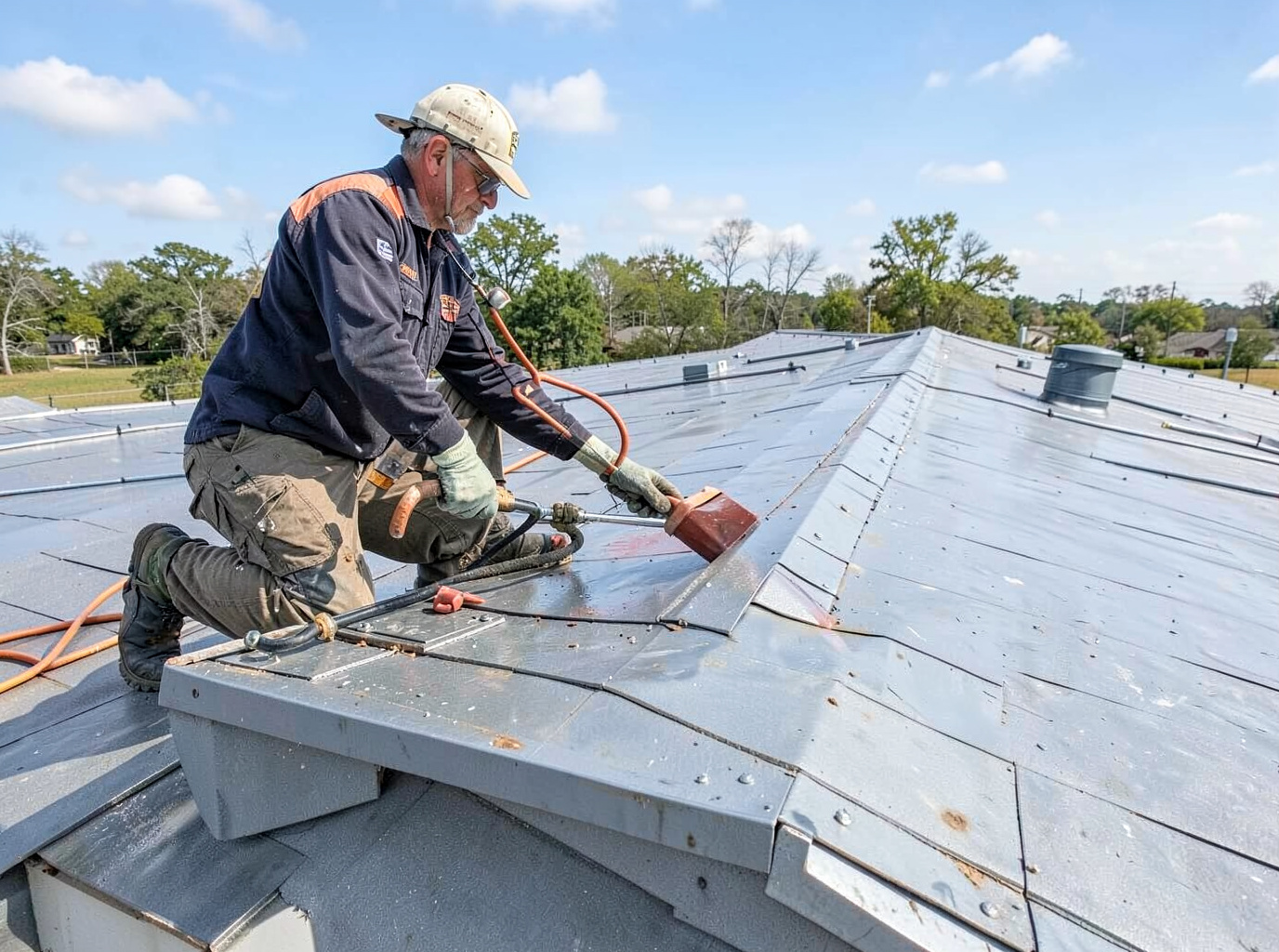
Wichita Falls summers push roof surfaces past 160 degrees while winter winds regularly exceed 30 mph across open lots in Southside and near Lake Wichita. Heat-resistant replacements start with light-colored or IR-reflective shingles and metal panels that reduce attic heat load and slow thermal expansion on older ranch homes common in University Park. Proper underlayment and ridge venting become critical because rapid temperature drops at night create condensation that rots decking if airflow is blocked.
Many homes built before 1980 in Downtown Wichita Falls and along the Wichita River have 4:12 pitches and limited overhangs that trap heat against the deck. We remove existing layers completely rather than overlaying because added weight increases wind uplift risk during spring storms. Flashing around chimneys and skylights receives extra attention since wind-driven rain finds every seam when temperatures swing from 95 to 35 degrees in a single day.
Wichita County wind zones require six-inch nail spacing on perimeter shingles and ring-shank fasteners on metal panels. We also check for soil movement around foundations in Henrietta and Burkburnett corridors because shifting can stress roof-to-wall transitions. Homeowners often overlook ridge cap ventilation; without it, trapped heat shortens shingle life by years even on new installations.
Working near the River Bend Nature Center and Kell House Museum areas means coordinating with tree canopies that drop limbs during high-wind events. We specify impact-rated underlayment in these spots to protect against both hail and falling branches while maintaining the reflective surface needed for summer performance.
Technician insight
In Wichita Falls the thing that catches most people out with Heat-Resistant Roof Replacement is skipping extra perimeter nailing on the south and west exposures. Those sides take the afternoon sun and the strongest crosswinds off the plains, so standard fastening schedules fail within two seasons on homes in Southside and near the river.
Southside Ranch Roof Replacement
Homeowner noticed attic temperatures staying above 100 degrees even after sunset. We found two layers of 20-year-old shingles with lifted tabs on the west slope. After full tear-off we installed reflective shingles with six-inch perimeter nailing and added ridge venting sized for the low-pitch attic. The owner reported cooler upstairs rooms the following summer.
Heat-Resistant Roof Replacement Services We Offer
✓Asphalt Shingle Heat-Reflective Replacement
Install cool-roof rated shingles with enhanced granule technology to lower attic temperatures in Southside and University Park homes.
✓Metal Panel Wind-Resistant Upgrade
Fit standing-seam or screw-down metal systems rated for 130 mph winds common along Lake Wichita and open Wichita County lots.
✓Tile Roof Heat Shield Installation
Replace aging tile with ventilated, light-colored concrete or clay tiles that reflect heat while matching historic Downtown Wichita Falls architecture.
✓Synthetic Slate High-Temp Roofing
Apply engineered slate that withstands repeated thermal cycling without cracking on older homes near Memorial Auditorium.
✓Ridge Vent and Insulation Upgrade
Add balanced ridge and soffit venting plus radiant barrier to reduce heat buildup in attics across Burkburnett and Henrietta properties.
Heat-Resistant Roof Replacement Cost in Wichita Falls, TX
| Service | Typical Range | What Affects It |
|---|---|---|
| Asphalt Cool-Shingle Replacement | $6,500–$12,000 | Varies with roof size and number of layers removed |
| Metal Panel System | $9,000–$16,500 | Higher for steep pitches and custom colors |
| Tile or Synthetic Slate | $11,000–$18,000 | Includes upgraded underlayment for wind zones |
| Ridge Vent Addition Only | $1,200–$2,400 | When performed with full replacement |
Ranges are typical for Wichita Falls, TX and confirmed with an exact written quote before any work starts.
How it works
- 1
On-Site Assessment
Measure roof, inspect decking condition, and note wind exposure and tree proximity specific to the Wichita Falls neighborhood.
- 2
Material Selection
Choose reflective or impact-rated products matched to local summer heat and 30-plus mph wind events.
- 3
Deck Preparation
Remove old layers, repair damaged sheathing, and install high-temp underlayment at all valleys and eaves.
- 4
Installation and Ventilation
Secure new roof with code-required nailing patterns and add ridge venting sized for the home's attic volume.
- 5
Final Walk-Through
Check flashing, fasteners, and ventilation performance before cleanup and homeowner review.
Pricing
Final cost depends on square footage, pitch, existing layers, and material choice.